Interviews Members' piece
The Cartographer of Forgetting
For forty years, Lena Sørenson has mapped places that no longer exist — drowned villages, demolished streets, coastlines the sea has taken back. A conversation about memory, loss, and the ethics of the line.
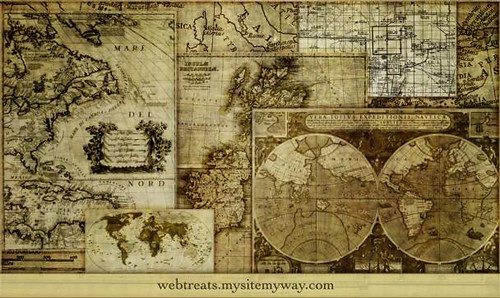
Lena Sørenson works in a converted lifeboat station on the Danish coast, surrounded by maps of places you cannot visit. There is a village beneath a reservoir in Wales; a street in Warsaw that exists now only in her ink; a stretch of Norfolk coast that has moved three hundred metres inland since the survey she is correcting was made.
She calls it the cartography of forgetting. We spoke over two long afternoons.
On why a map of a drowned village matters
You map places that are gone. What is the use of a map you cannot follow?
A map was never only for following. It is a claim that a place was real — that it had a shape, that people knew the shape, that the knowing can survive the place. When a village is drowned for a reservoir, the people are compensated and moved, and within a generation the village becomes a story without edges. A map gives it edges again.
“The sea does not forget the coastline. It simply disagrees with us about where it is. My job is to record the disagreement.”
On the ethics of the line
Is there a dishonesty in it? You are drawing certainty over something uncertain.
Every map does that — that is the violence of cartography, and also its gift. A coastline is not a line; it is a negotiation that happens four times a day. The moment you draw it, you have lied a little. The question is only whether you lie in service of remembering or in service of forgetting. I have chosen my side.
The full conversation — on the village beneath Llyn Celyn, the maps she has refused to make, and the one place she will not put on paper — continues below.
Unlocking your reading…